
Best tools to measure wall paint colour
· Paint colour matchers
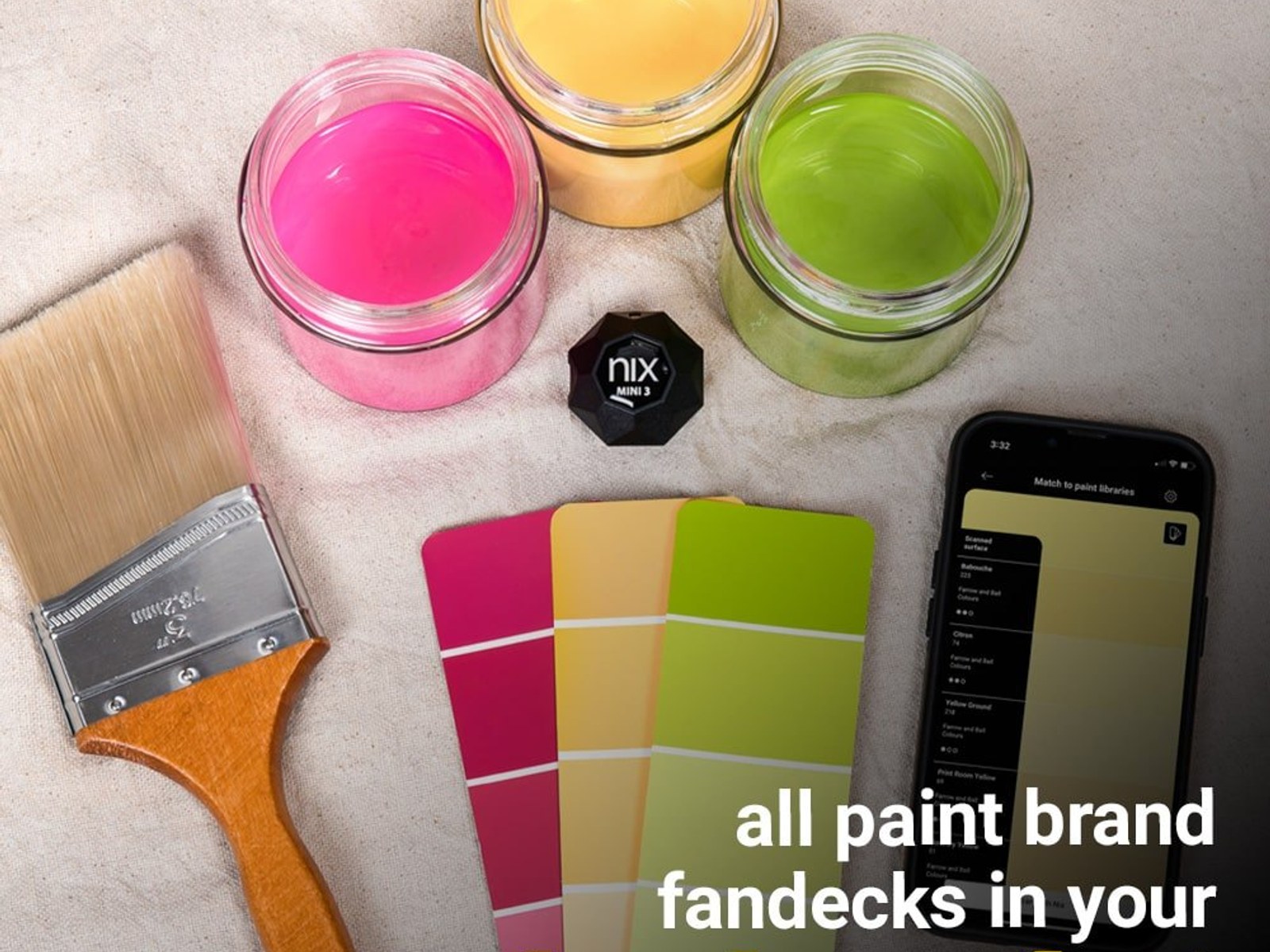
Trying to rematch a wall colour with a phone photo is how you end up with three almost-right sample pots and a slightly wrong room. Ambient light, white balance, shadows from lamps, and even the phone screen itself all push the reading around. What you want is a sensor that seats against the surface, blocks the room, and measures with its own light.
That is what these pocket colour matchers do. Press, scan, get paint codes (and usually HEX, RGB, and Lab values) in an app. I shortlisted five that actually behave like instruments, not camera filters. Number one is the best everyday pick. The rest win on sheen reading, lab-grade spectral data, designer colour data, and budget.
Prices move and stock rotates. I have linked Amazon US and Amazon AU product pages where the model is listed. If Amazon AU does not carry it cleanly, I linked the manufacturer page instead. Affiliate tags can be added later.
Quick comparison
- #1 Best overall: Nix Mini 3
- #2 Best colour + sheen: Color Muse 3
- #3 Best spectral accuracy: Nix Spectro 2
- #4 Best for designers: Datacolor ColorReader
- #5 Best value: Datacolor ColorReader EZ
1. Best overall: Nix Mini 3
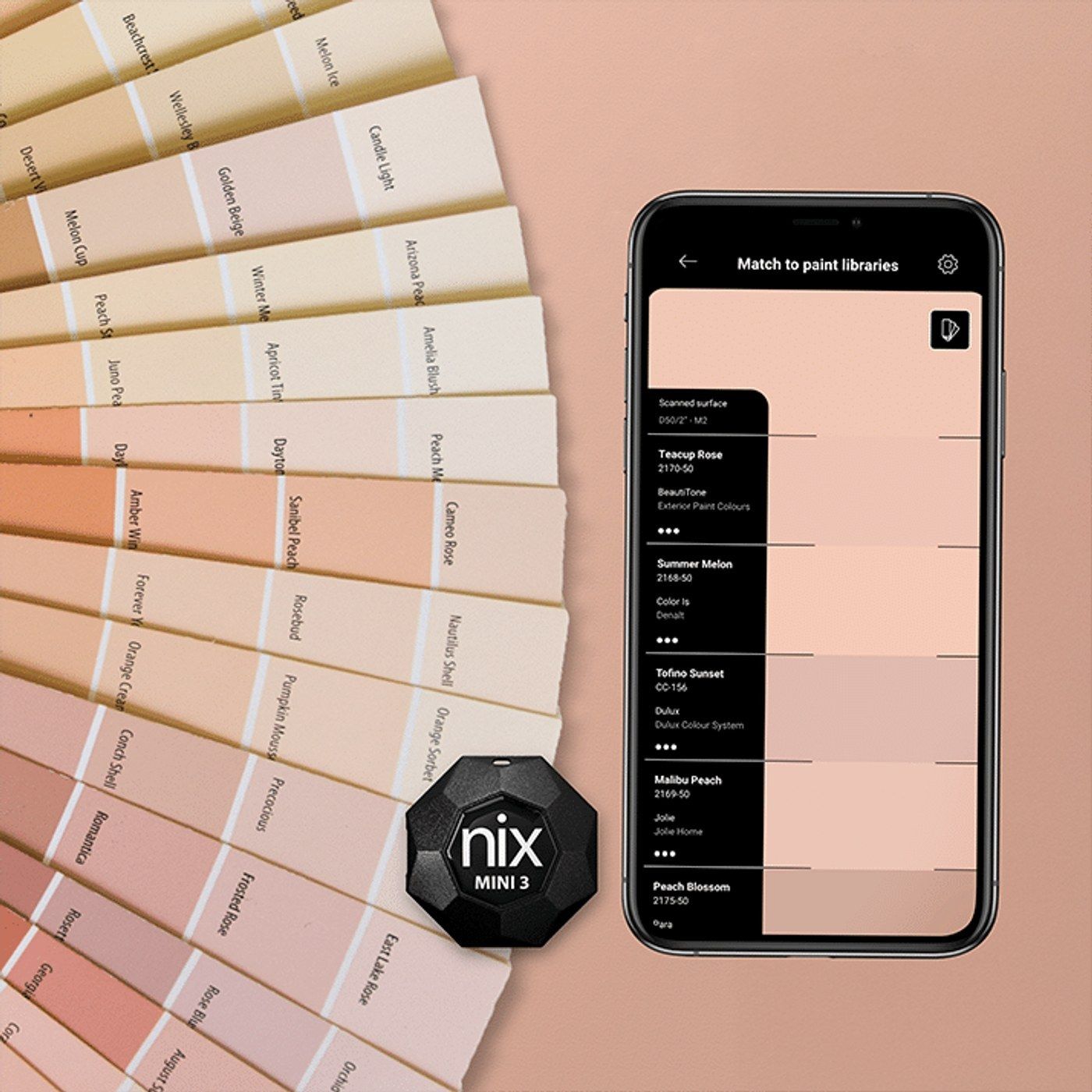
If I could only keep one wall-colour tool for home projects, contractors, and interior work, it would be the Nix Mini 3. It is small, Bluetooth-paired to the free Nix Toolkit app, and built around the thing that matters: a sealed reading that ignores room lighting. Scan a wall, pillow, or trim, then match into a huge brand-name paint library (Benjamin Moore, Behr, Sherwin-Williams, Dulux, and many more, with libraries varying by country).
You also get digital values (HEX, RGB, CMYK) for design work, IPX4 splash resistance for job sites, USB-C charging, and no constant recalibration ritual. Premium libraries like Pantone, RAL, and NCS sit behind an in-app subscription if you need them.
Why it wins overall
- Own light source plus sealed contact reading, so room light does not own the result
- Massive paint-brand match library for real store codes
- Durable, pocketable, and simple enough for a weekend renovation
- Strong enough for designers who also need HEX and RGB
Watch for: Paint libraries differ by region. Confirm your local brands in the app before you buy. Also buy a sample pot. Texture, sheen, and ageing paint still matter after a perfect code.
2. Best colour + sheen: Color Muse 3
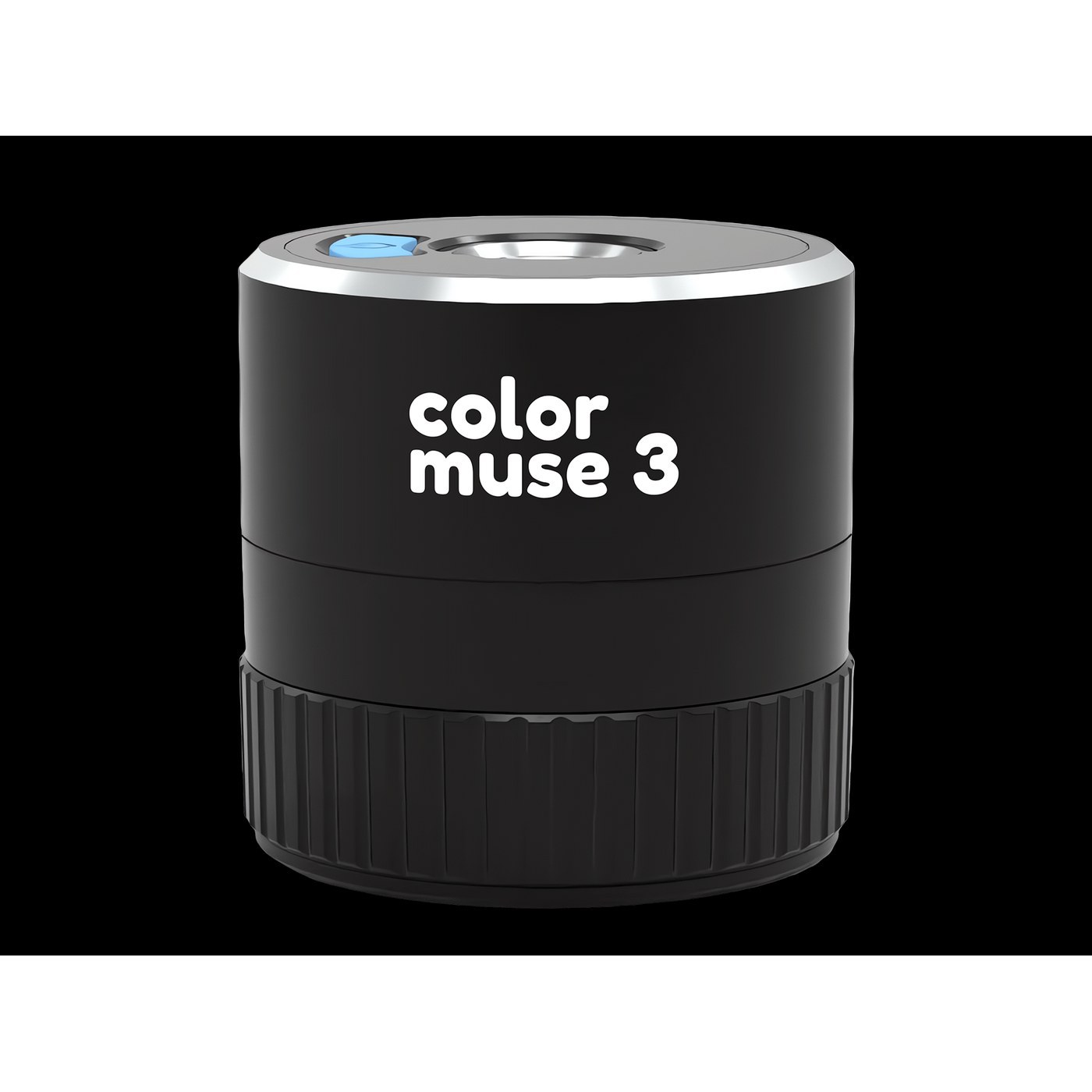
Colour alone is only half the wall story. Flat, eggshell, satin, and gloss all change how the same hue reads in a room. The Color Muse 3 is the specialist when you care about both colour and sheen in one press. Variable’s Surface Smart setup combines real-world and scientific colour geometries with a 60° gloss reading, then matches into a large brand catalogue in the Color Muse app.
That makes it especially useful when you are trying to match an existing painted surface and the finish is unknown, or when you need to communicate finish as clearly as the tint.
Best for: renovators and painters who keep getting the hue right and the sheen wrong.
Watch for: Some advanced libraries (RAL, Pantone) may need an app subscription. Confirm current paint-brand coverage for your country.
3. Best spectral accuracy: Nix Spectro 2
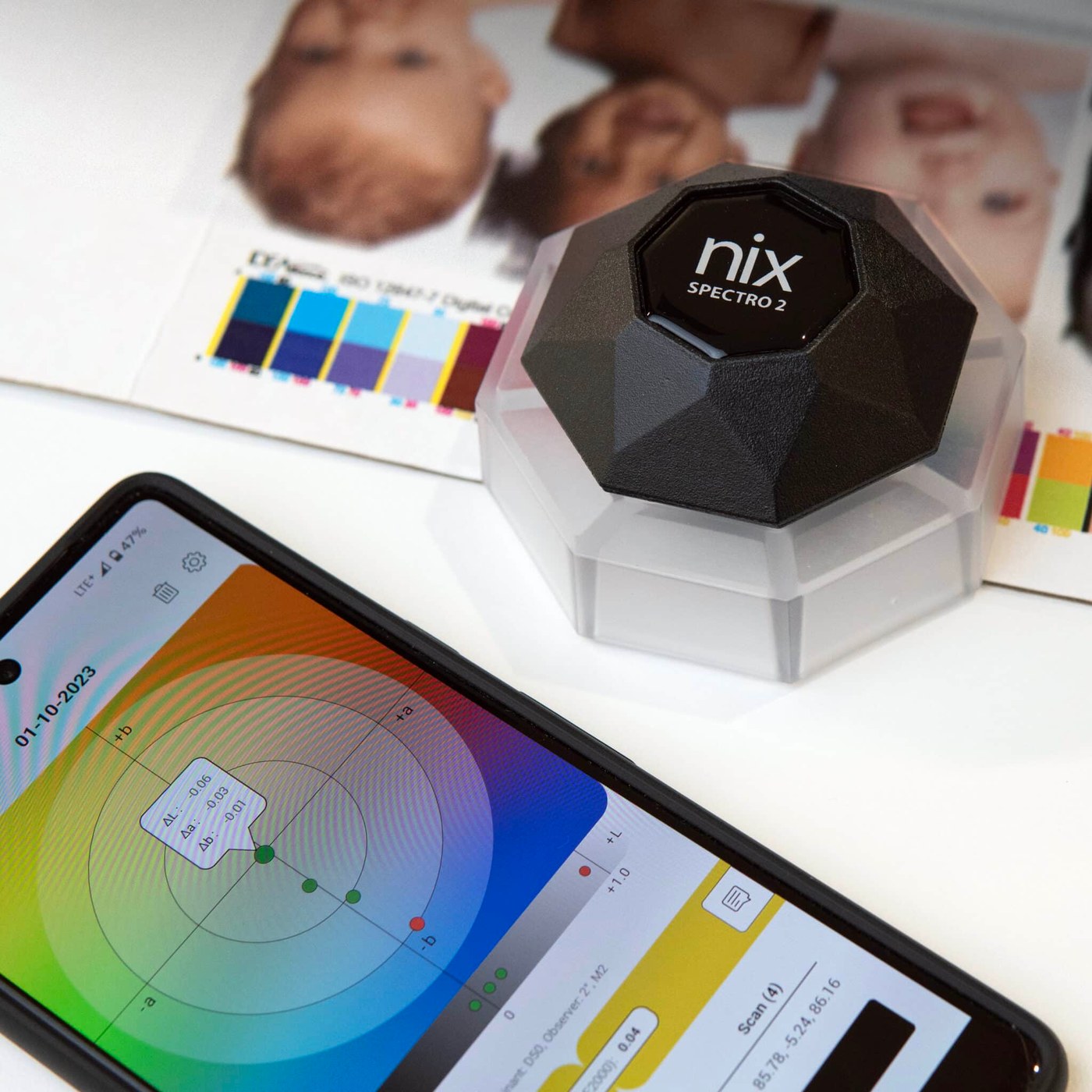
When “close enough” is not enough, step up to a real spectrophotometer. The Nix Spectro 2 reads across many spectral channels with controlled lighting modes, exports deeper colour data, and supports quality-control workflows that go well beyond picking a fan-deck neighbour. Independent testing on low-cost portable spectrophotometers has put Spectro-class devices at the top for colourimetric accuracy.
You still get paint-library matching through Nix Toolkit, but the reason to buy this is spectral confidence: print, coatings, packaging, or paint work where Delta E and repeatability matter.
Best for: pros who need instrument-grade readings, not just a weekend wall rematch.
Watch for: Price. This is overkill if you only need a living-room touch-up code once a year.
4. Best for designers: Datacolor ColorReader
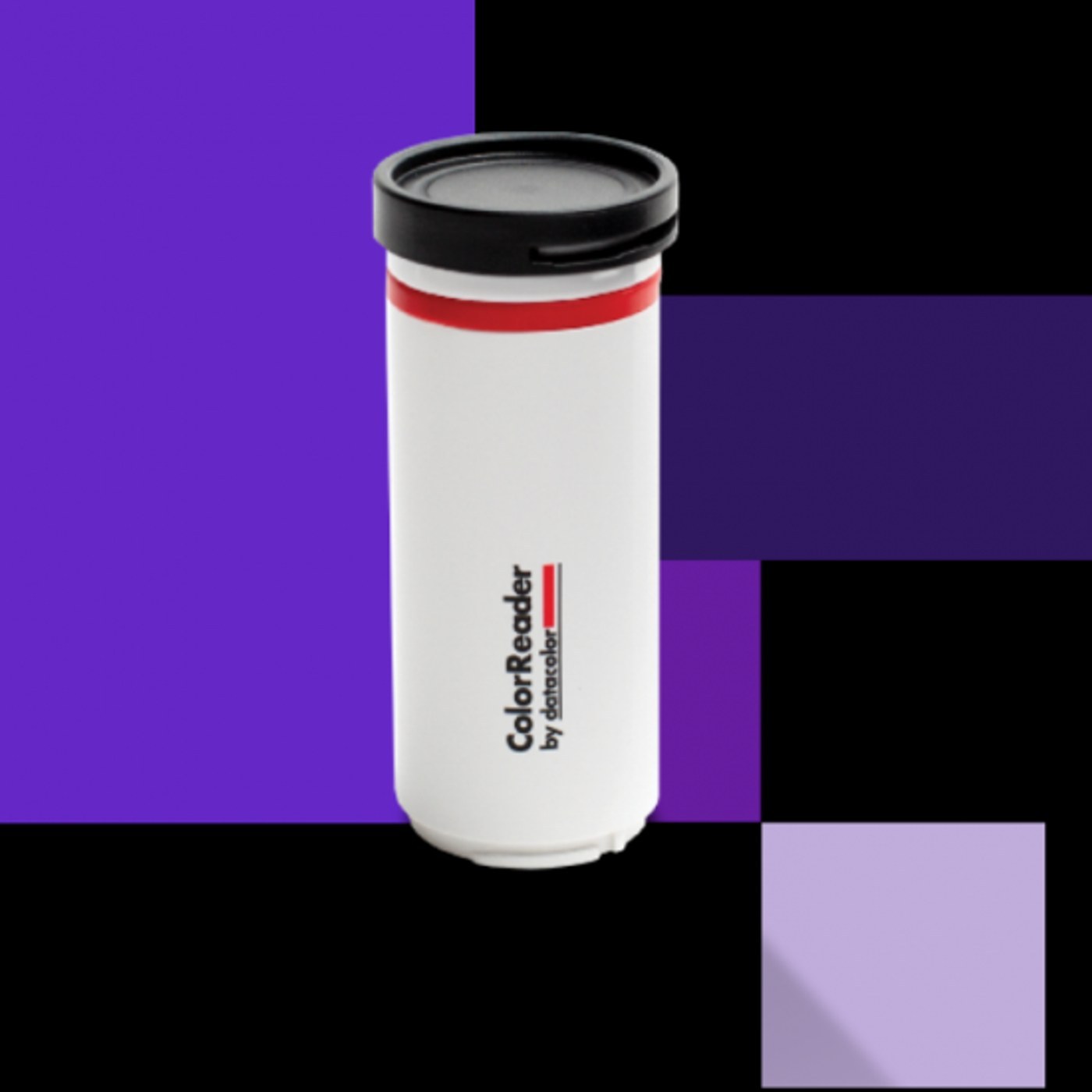
The Datacolor ColorReader is the designer-friendly pick: scan a flat surface, get top paint matches from major brands, then dig into useful colour data (CIE Lab, RGB, HEX, CMYK, LRV, LCH, Delta E) and coordinating palettes in the app. Built-in LEDs and a contact reading keep ambient light from rewriting the sample.
If your workflow is “match this fabric or wall, then build a palette around it,” ColorReader is still one of the clearest tools for that loop.
Best for: interior designers, stylists, and anyone who wants matches plus coordinating colour options in one app.
Watch for: Needs a flat, clean patch for best results. Heavily textured walls and dirty spots will fool any sensor.
5. Best value: Datacolor ColorReader EZ
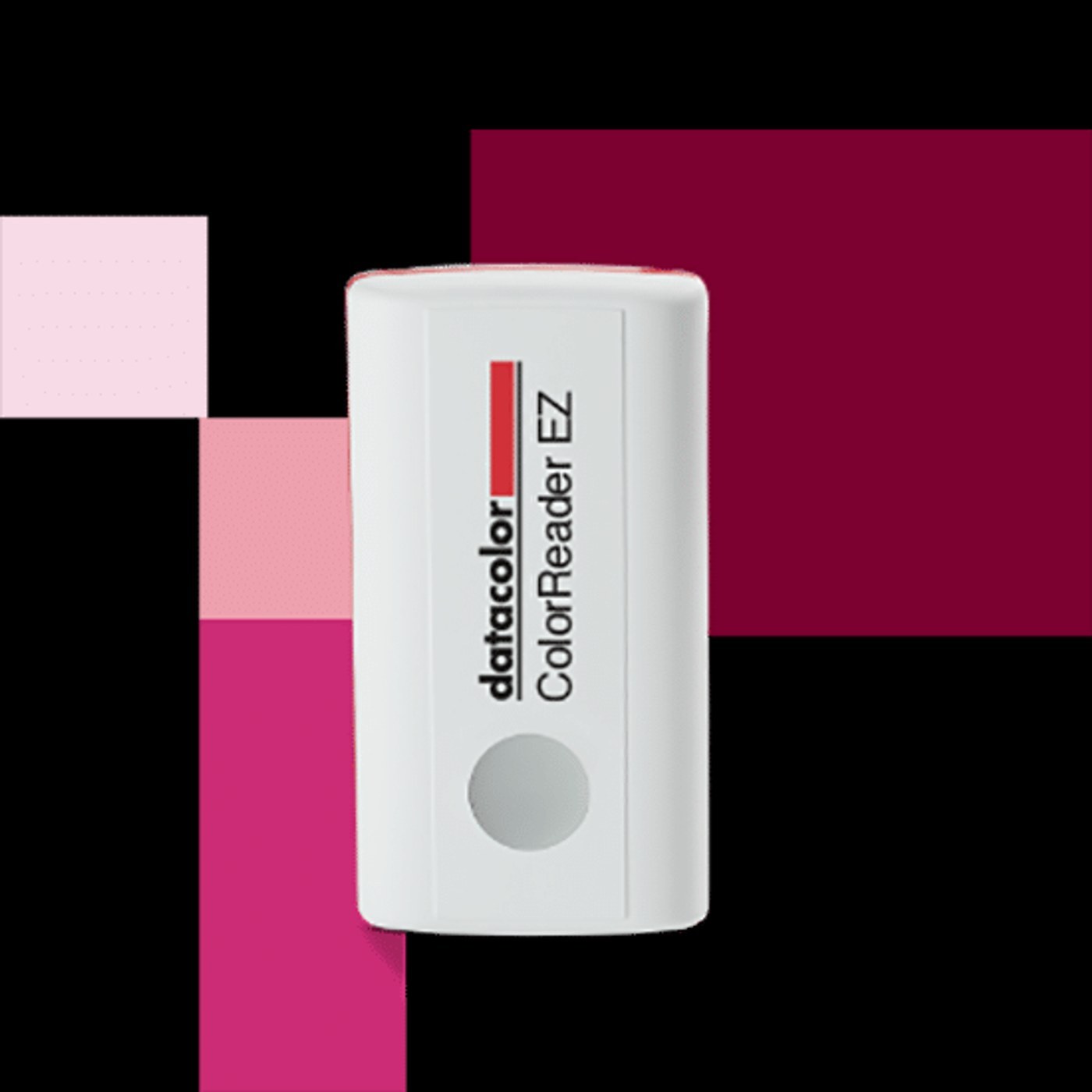
If you want the ambient-light-resistant scan workflow without paying Mini 3 or full ColorReader money, the Datacolor ColorReader EZ is the value specialist. Same idea: press to the surface, let the device control the light, read paint matches and digital values in the ColorReader app, and use coordinating colour tools when you are building a scheme.
It is the one I point people to when the brief is “I need a real sensor once or twice a year for touch-ups and accent walls,” not a daily contractor tool.
Best for: homeowners and DIYers who want a proper reader on a smaller budget.
Watch for: Fewer pro bells than ColorReader or Spectro 2. Check current battery type and app features on the listing you buy.
How I would choose a wall colour matcher
- Mostly rematching house paint and grabbing brand codes? Start with Nix Mini 3.
- Need finish as well as hue? Choose Color Muse 3.
- Doing QC, coatings, or print-level colour control? Pay for Nix Spectro 2.
- Building palettes and coordinating schemes every week? Datacolor ColorReader.
- Budget first, occasional touch-ups? ColorReader EZ.
Whatever you buy, scan a clean, dry, flat area, take a few readings and average them, then still paint a sample. Sensors remove the lighting lottery. They do not replace a sample pot on your actual wall under your actual lights.
Final pick
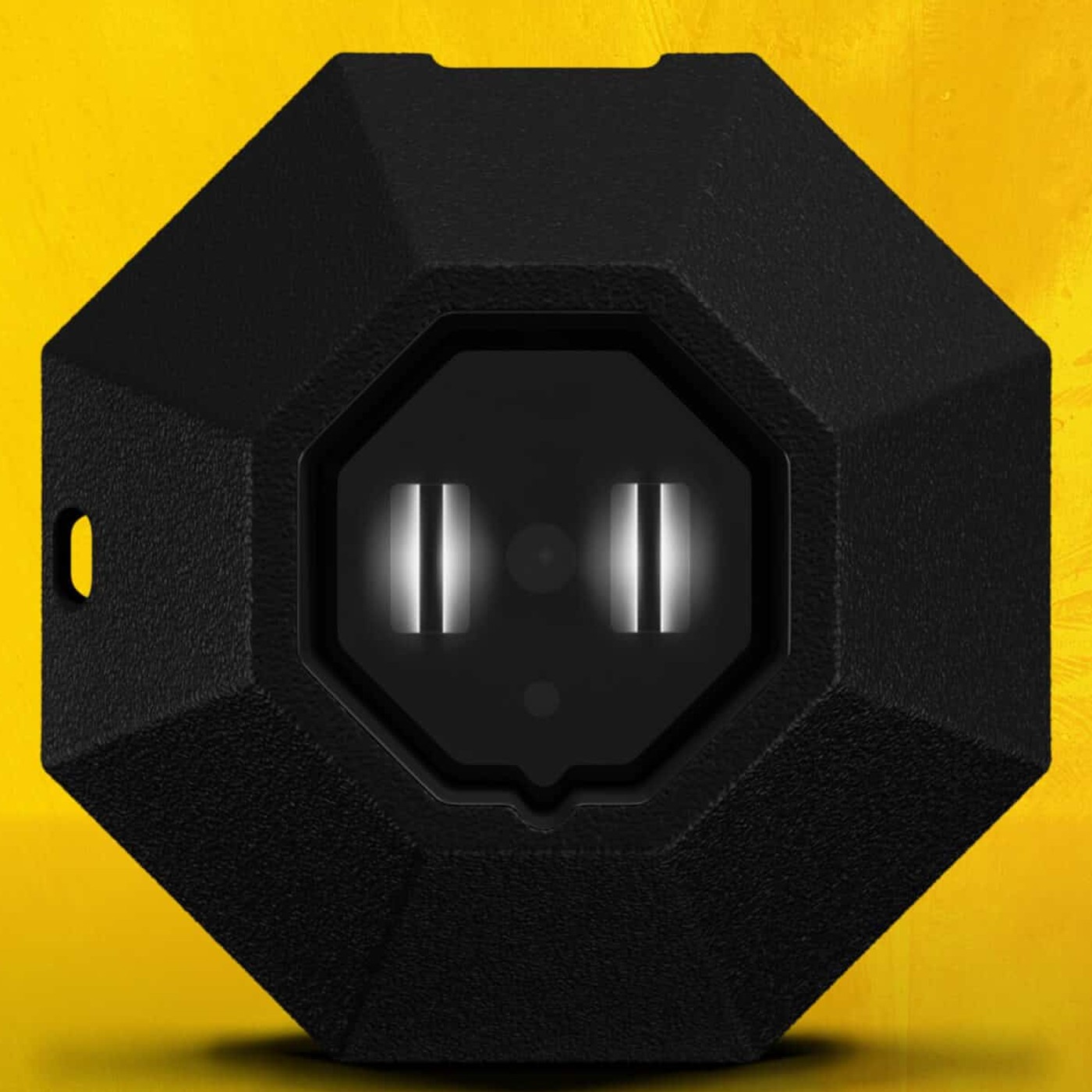
For most people matching walls, trim, and inspiration surfaces at home, I still start with the Nix Mini 3. It gets the ambient-light problem right, the paint library is deep enough for real shopping trips, and it is small enough that you will actually carry it. Step to Color Muse 3 when sheen matters, Spectro 2 when accuracy is the job, ColorReader when palette work is central, and ColorReader EZ when value leads.
If you want me to cover paint-store spectrophotometer visits, LRV picking for small rooms, or brand-to-brand equivalents next, send it through the suggestions page.
More from ToolzWorx
Explore free planning and design tools on the home page, or read about how we build at About.